Tortelli di patate from the Mugello are a fresh egg pasta first course filled with boiled, mashed potatoes flavoured with a soffritto of garlic and parsley, a little tomato, Parmigiano and nutmeg. They are the signature dish of the Mugello, the valley north of Florence, and are usually served with meat ragù, wild boar sauce or porcini mushrooms.
In this article you’ll find quantities for 4 people, how to make a tasty, dry filling, how to roll the pasta and seal the tortelli, cooking times, the traditional sauces, variations and how to store them raw or frozen.
Recipe card
| Item | Details |
|---|---|
| Preparation | 1 hour 30 minutes |
| Cooking | 40 minutes (potatoes) + 3-4 minutes (tortelli) |
| Resting | 30 minutes (dough and cooling the filling) |
| Total time | About 2 hours 45 minutes |
| Difficulty | Medium |
| Servings | 4 people (about 40 tortelli) |
| Category | First course |
| Cuisine | Tuscan, Mugello |
| Cooking method | Boiling |
Ingredients for 4 people
For the pasta
- 400 g Italian 00 flour (or 300 g 00 flour and 100 g fine durum wheat semolina)
- 4 medium eggs
- 1 tablespoon extra virgin olive oil
- 1 pinch of salt
For the filling
- 800 g floury white-fleshed potatoes
- 2 garlic cloves
- 1 bunch of parsley (about 15 g)
- 3 tablespoons extra virgin olive oil
- 2 tablespoons tomato passata (about 30 g)
- 60 g grated Parmigiano Reggiano
- Nutmeg, salt and pepper, to taste
To serve
- 400 g meat or wild boar ragù, or tomato sauce
- Grated Parmigiano Reggiano, to taste
The potatoes. Floury white-fleshed potatoes give a dry, firm filling that doesn’t make the pasta soggy. Boil them in their skins so they absorb less water, and mash them while still hot. In the Mugello, locally grown potatoes are used whenever possible.
The soffritto. This is what sets the Mugello filling apart from plain mashed potato: garlic and parsley gently softened in oil, with a touch of tomato for colour and flavour. Parmigiano and nutmeg round out the taste without masking the potato.
How to make tortelli di patate
- Make the dough. Heap the flour into a well, crack the eggs into the centre, add the oil and salt and knead for about 10 minutes into a smooth, elastic ball. Wrap it in cling film and leave it to rest for 30 minutes.
- Boil the potatoes. Put them unpeeled into a pan of cold salted water and cook for 30-40 minutes from the boil, until a fork slides through without resistance.
- Make the soffritto. Finely chop the garlic and parsley and soften them in the oil over low heat for 2 minutes, without letting the garlic colour. Add the passata and cook for another 3 minutes.
- Finish the filling. Peel the potatoes while still hot and pass them through a potato ricer. Add the soffritto, Parmigiano, a grating of nutmeg, salt and pepper and mix well. Taste: it should be well seasoned. Let it cool completely.
- Roll the pasta. Divide the dough into 4 pieces and roll them out one at a time, by hand or with a machine, to about 1 mm thick, in strips 10-12 cm wide. Keep the other pieces covered so they don’t dry out.
- Fill and seal. Along the lower half of each strip, place walnut-sized mounds of filling (about 15 g) 4-5 cm apart. Fold the pasta over the filling and press with your fingers around each mound to push out the air and seal the edges.
- Cut the tortelli. With a fluted pasta wheel, cut square or rectangular tortelli about 5-6 cm across and lay them on a tray dusted with semolina, without overlapping.
- Cook and dress. Cook the tortelli in plenty of salted water at a gentle boil for 3-4 minutes. Lift them out with a slotted spoon, lay them in the hot sauce and serve with grated Parmigiano.
History and tradition of Mugello potato tortelli
Potato tortelli are considered the most traditional dish of the Mugello and have become the area’s culinary symbol. It is a home recipe: every family and every trattoria has its own version, and the differences lie mainly in the filling (some add a little tomato, some a spoonful of ragù, some use potatoes only) and in the size of the tortelli.
The sauces follow the local cooking: meat, duck or wild boar ragù, plain tomato sauce and, in autumn, porcini mushrooms. In summer several villages in the valley hold food festivals (sagre) devoted to tortelli.
Practical tips
- Cold filling. A warm filling dampens the pasta and makes sealing difficult: it should be at room temperature or fridge-cold.
- Keep water out of the potatoes. Boil them whole and unpeeled; if the filling is soft, dry it for a few minutes in a pan over low heat before adding the soffritto.
- Thin but not transparent pasta. At about 1 mm the tortelli stay tender and hold up during cooking without breaking.
- Gentle boil. A rolling boil splits the tortelli open: lower the heat as soon as they go in and cook a few at a time.
Variations and storage
Variations
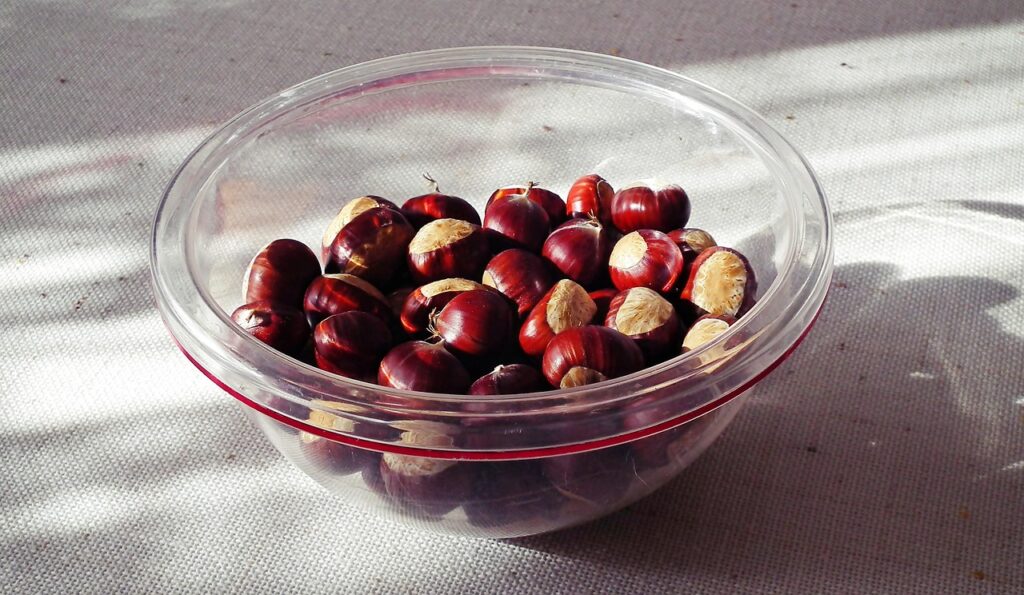
Some families add two or three spoonfuls of ragù to the filling, others make it with just potatoes, garlic, parsley and cheese, without tomato. For a lighter dish the tortelli are dressed with melted butter and sage. In autumn the Mugello also makes tortelli filled with marroni chestnuts, using the same pasta and a sweet-savoury chestnut filling.
Storage
Homemade raw tortelli should be cooked the same day or at the latest the next day, kept in the fridge on a floured tray, because the moisture in the filling softens the pasta. To keep them longer, freeze them spread out on a tray and then transfer them to a bag: they keep for about a month and are cooked from frozen, adding a couple of minutes. The filling on its own keeps in the fridge for a day.
Frequently asked questions about tortelli di patate
Which potatoes are best for tortelli?
Floury, white-fleshed potatoes that stay dry after cooking. Waxy yellow-fleshed potatoes give a wetter, gluey filling.
What sauce goes with potato tortelli?
The traditional sauces are meat ragù, wild boar or duck sauce, tomato sauce and, in autumn, porcini mushrooms. Butter and sage is also a popular choice.
How long do they take to cook?
Fresh tortelli cook in 3-4 minutes in salted water at a gentle boil; frozen ones need a couple of minutes more. They are ready shortly after they rise to the surface.
Can they be made ahead?
Yes: the filling can be made the day before and kept in the fridge, while sealed tortelli are best frozen if you won’t cook them by the following day.
More Tuscan fresh pasta recipes
For the pasta sheet you can follow the fresh egg pasta recipe step by step. As a sauce, the ragù from the pappardelle with wild boar ragù is among the most used in the Mugello, while in autumn you can use the sauce from the pappardelle with porcini mushrooms. The same sealing technique is used for ricotta and spinach ravioli. To learn how to roll and seal filled pasta, Orto San Frediano runs cooking classes in Florence.