Fagioli all’uccelletto are a Tuscan side dish made with cannellini beans, tomato, garlic and sage. The beans, boiled first, are tossed in a base of flavoured oil and then cooked in tomato until coated in a thick sauce. It is a simple dish, where the quality of the beans and the cooking make all the difference.
In this article you’ll find the recipe for 4 people, with how to cook dried cannellini, a step-by-step method, timings, tips to keep the beans from breaking and the most common variations, starting with sausages.
Recipe card
| Item | Details |
|---|---|
| Prep time | 15 minutes |
| Cooking time | 1 hour 50 minutes (beans 1 hour 30 minutes, uccelletto 20 minutes) |
| Resting time | 12 hours (soaking the beans) |
| Total time | About 14 hours, 12 of which soaking |
| Difficulty | Easy |
| Servings | 4 people |
| Course | Side dish |
| Cuisine | Tuscan |
| Cooking method | Boiling, then in a pan |
Ingredients for 4 people
- 300 g dried cannellini beans (or 750 g cooked cannellini)
- 400 g canned peeled tomatoes or tomato passata
- 3 garlic cloves
- 10 fresh sage leaves
- 60 ml extra virgin olive oil, plus extra to serve
- Fine salt, to taste
- Ground black pepper, to taste
The beans. Cannellini are the traditional choice: small and white, with a thin skin and creamy flesh. They should be cooked until tender but whole, because in the second step they will keep absorbing the sauce.
The sage. It is the aroma that defines the dish: it must be fresh. Dried sage has a more bitter, dusty flavour.
How to make fagioli all’uccelletto
- Soak the beans. The evening before, rinse them and leave them in plenty of cold water for 12 hours.
- Boil the beans. Drain them and put them in a pot, ideally terracotta, with 2 litres of cold water, 1 garlic clove and 3 sage leaves. Bring to the boil, then cook over the lowest heat, with the lid ajar, for about 1 hour 30 minutes, until tender. Salt in the last 10 minutes and leave them in their water.
- Make the base. In a wide pan, warm the oil over low heat with the 2 remaining garlic cloves, crushed, and the rest of the sage leaves. Let it infuse for 2-3 minutes, without letting the garlic brown.
- Flavour the beans. Add the beans, drained with a slotted spoon, and let them absorb the oil for 5 minutes, stirring gently.
- Add the tomato. Add the crushed peeled tomatoes or passata, season with salt and cook over low heat for 15-20 minutes, until the sauce has thickened. If it dries out too much, add a ladle of the bean cooking water.
- Serve. Remove the garlic, adjust the salt, finish with a grind of pepper and a drizzle of raw olive oil. Serve hot or warm.
History and tradition of fagioli all’uccelletto
Fagioli all’uccelletto are found throughout Tuscany and especially around Florence and Prato. They are a home-cooking side dish, served above all with grilled meats and sausages.
The origin of the name is uncertain. The most cited explanation goes back to Pellegrino Artusi, according to whom the name comes from the aromatics used, garlic and sage, the same ones traditionally used to cook roast small birds (“uccelletti”). Even the most careful sources, however, consider the origin of the name uncertain.
Beans have always been an important part of Tuscan cooking, so much so that Tuscans have kept the playful nickname of “mangiafagioli”, bean-eaters. Tradition has it that cannellini should be cooked slowly, in a terracotta pot, over very low heat.
Practical tips
- Cook the beans over the lowest heat. A rolling boil breaks the skins: the water should barely simmer.
- Don’t salt at the start. Salt during cooking toughens the bean skins and lengthens the cooking time.
- Stir gently. During the second step use a wooden spoon and slow movements, or shake the pan: the beans must stay whole.
- Keep the cooking water. It is tastier than plain water and helps adjust the thickness of the sauce without diluting the flavour.
- Cook the beans the day before. Boiled beans keep in their water in the fridge for 2 days: the next day, the second step takes just 25 minutes.
Variations and storage
Variations
The best-known variation is with sausages: brown 4 pork sausages in the pan before the beans, remove them, continue with the recipe and return them to the sauce for the last 10 minutes. It then becomes a one-dish meal.
Some recipes use diluted tomato paste instead of peeled tomatoes, for a darker, thicker sauce, or add a sprig of rosemary. Some add a pinch of chilli to the oil and garlic base.
A different but related preparation is fagioli al fiasco, beans cooked slowly in a glass flask with oil, garlic and sage, without tomato.
Storage
Fagioli all’uccelletto keep in the fridge, in a closed container, for 2-3 days. Reheat them over low heat with a spoonful of water. They can also be frozen for 2-3 months.
Frequently asked questions about fagioli all’uccelletto
Can I use canned beans?
Yes: you’ll need about 750 g of cooked cannellini, rinsed and drained. Skip the soaking and first cooking and start from the oil, garlic and sage base. Use water or vegetable broth to adjust the sauce. Canned beans are softer: stir with particular care so as not to crush them.
Why are they called all’uccelletto?
The most common theory, reported by Pellegrino Artusi, links the name to garlic and sage, the same aromatics used to cook roast small birds. There are no birds or meat in the dish: the reference is only to the way it is flavoured.
Can I use other beans?
Cannellini are the traditional choice, but you can also use toscanelli beans or other small white beans. Borlotti work, but they change the flavour and colour of the dish and have a thicker skin. Avoid large beans, which tend to fall apart in the second step.
What do you serve them with?
They are a classic side dish for bistecca alla fiorentina, grilled sausages and roasts. With sausages cooked directly in the sauce they become a one-dish meal. They are always served with Tuscan bread, to mop up the sauce.
More Tuscan recipes with beans
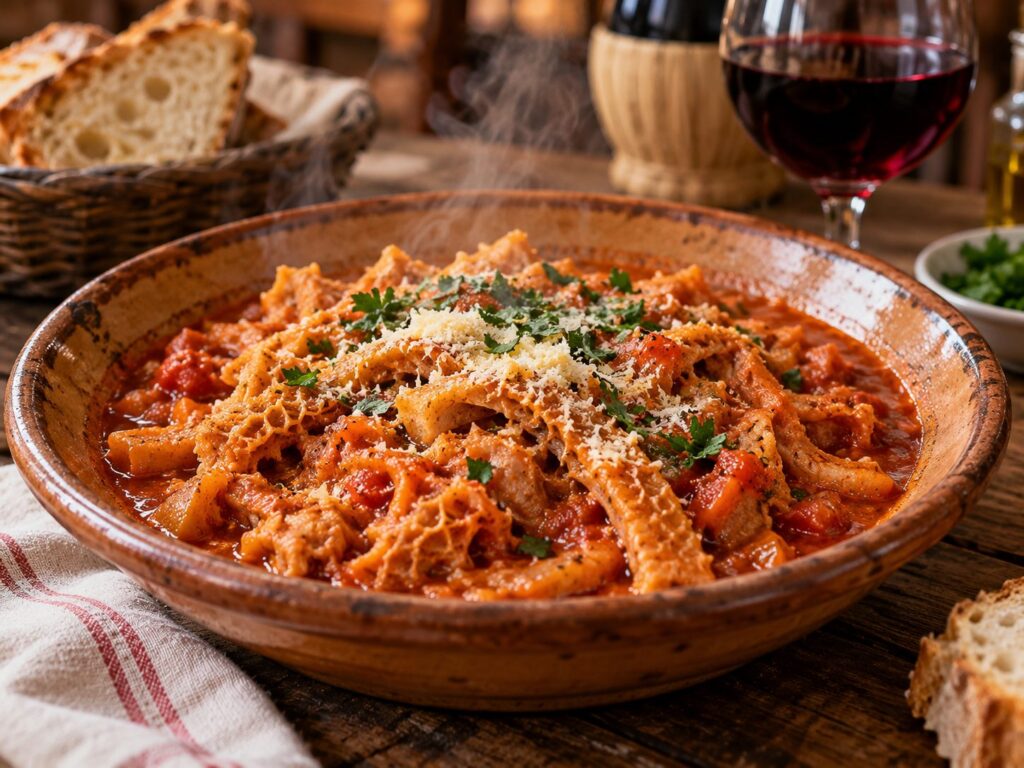
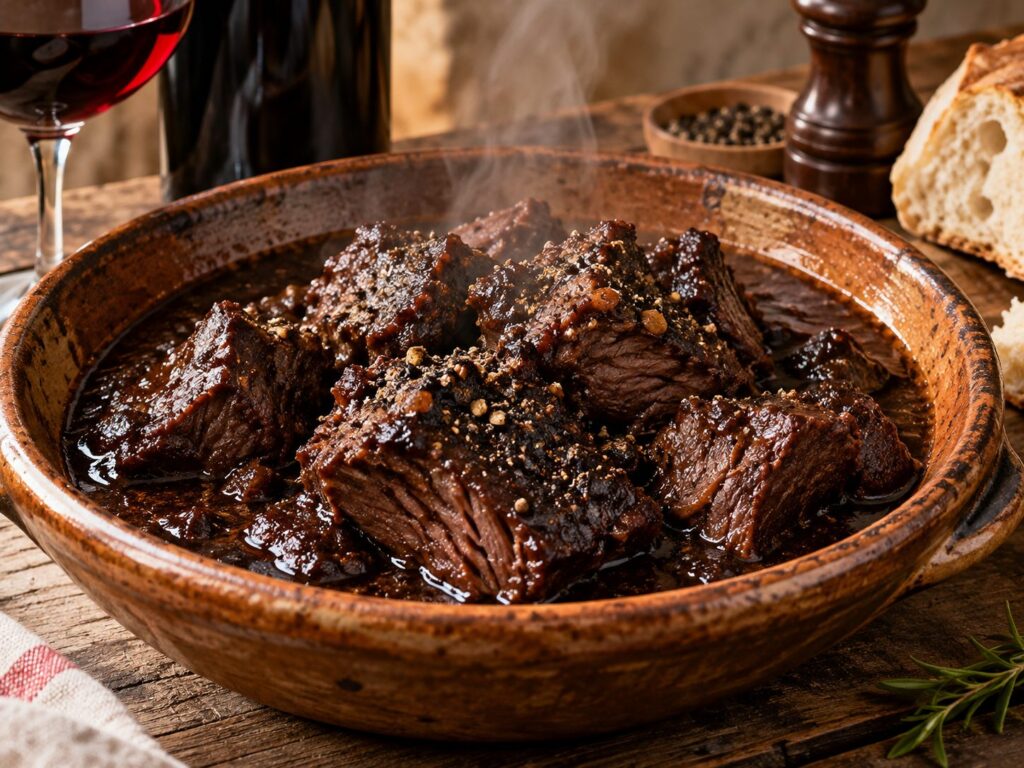
Cannellini are also the stars of ribollita, the winter soup with cavolo nero and stale bread. Among the Florentine dishes to serve with a side of beans are also peposo and trippa alla fiorentina, main courses rooted in traditional working-class cooking.