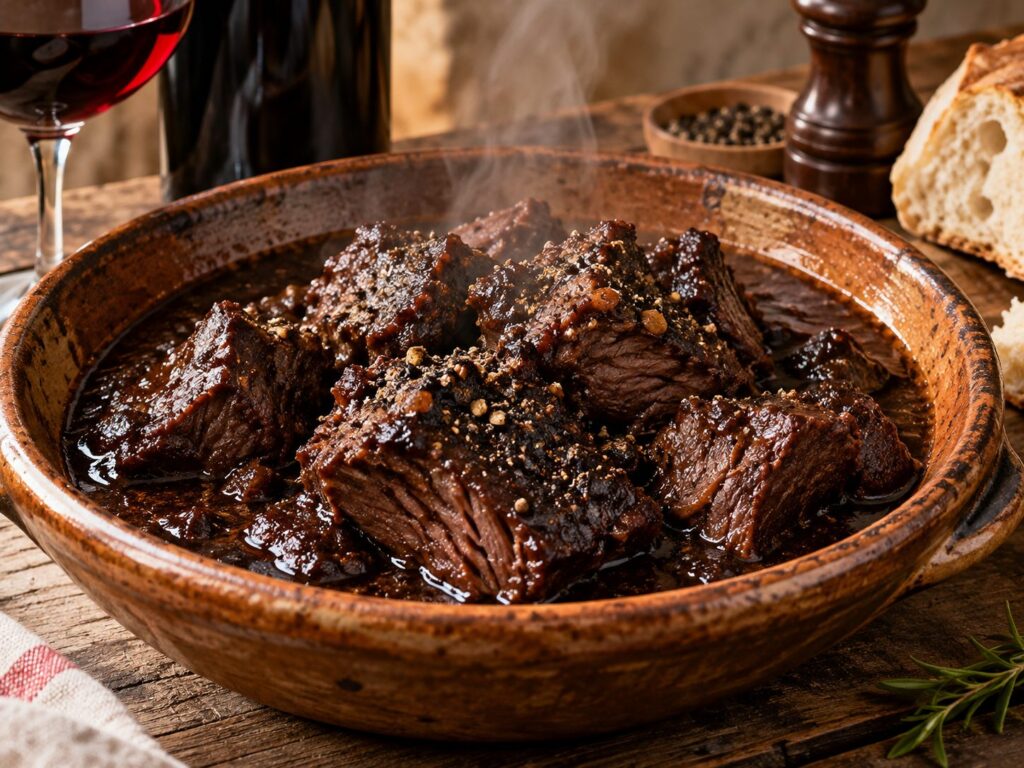
Trippa alla fiorentina is a dish of pre-boiled beef tripe, cut into strips and slowly cooked in a tomato sauce with onion, carrot and celery. It is served hot with plenty of grated Parmigiano and a drizzle of olive oil. Together with lampredotto, it is one of the most representative dishes of Florence’s popular cooking.
In this article you’ll find the trippa alla fiorentina recipe for 4 people, with advice on choosing and cleaning tripe, a step-by-step method, the right consistency for the sauce, practical tips, the variations and answers to the most common questions.
Recipe card
| Item | Details |
|---|---|
| Preparation | 20 minutes |
| Cooking | 55 minutes |
| Resting | 5 minutes |
| Total time | 1 hour 20 minutes |
| Difficulty | Easy |
| Servings | 4 people |
| Category | Meat main course |
| Cuisine | Tuscan |
| Cooking method | Stewed, in a pan |
Ingredients for 4 people
- 1 kg pre-boiled beef tripe (honeycomb and blanket tripe)
- 400 g peeled tomatoes
- 1 medium white or red onion (about 150 g)
- 1 carrot (about 80 g)
- 1 celery stick (about 60 g)
- 60 ml extra virgin olive oil, plus extra to serve
- 1 bay leaf (optional)
- 100-200 ml vegetable stock or hot water, if needed
- 60 g grated Parmigiano Reggiano
- Fine salt and black pepper, to taste
The tripe. At the butcher’s and in markets it is usually sold already boiled, white and ready to cook. Tripe is the stomach of the cow: this recipe generally uses honeycomb tripe (cuffia), recognisable by its honeycomb surface, and the thicker, smoother blanket tripe (croce). Lampredotto, which comes from the abomasum, is prepared differently.
The tomato and the cheese. The sauce should be thick and coat the tripe rather than stay watery: tomatoes crushed by hand give a fuller texture than passata. In the Florentine version Parmigiano is not an optional extra but part of the dish.
How to make trippa alla fiorentina
- Prepare the tripe. Rinse it under cold running water and drain. If it has a strong smell, blanch it for 5 minutes in lightly salted water, then drain. Cut it into strips about 1 cm wide and 5-6 cm long.
- Make the soffritto. Finely chop the onion, carrot and celery. In a wide pan, ideally terracotta, warm the oil over low heat and soften the vegetables for about 10 minutes, stirring often: they should become soft and translucent without browning.
- Season the tripe. Add the tripe and, if using, the bay leaf. Raise the heat slightly and cook for 5 minutes, stirring, until any remaining water has evaporated.
- Add the tomato. Add the peeled tomatoes, crushed by hand or with a fork, and season with salt and pepper. Bring to the boil, then lower the heat.
- Cook slowly. Cook over low heat with the lid ajar for about 40 minutes, stirring now and then. If the sauce dries out too much, add a little hot stock. The tripe is ready when it is tender but still slightly firm to the bite and the sauce is thick.
- Finish with the cheese. Turn off the heat, remove the bay leaf, adjust the seasoning and stir in half the Parmigiano. Leave to rest for 5 minutes.
- Serve. Divide the tripe among warm plates and finish with the remaining Parmigiano and a drizzle of raw olive oil. Serve with Tuscan bread.
History and tradition of trippa alla fiorentina
Tripe belongs to the quinto quarto, the “fifth quarter”: the offal and less prized parts of the animal that for centuries were affordable and formed the basis of popular cooking. In Florence these cuts have a special place: tripe, lampredotto and other parts of the cow’s stomach are still sold today by the trippai, the tripe vendors, from street stalls and in markets.
The trippai sell tripe boiled, to be simply seasoned, or already cooked. The version with tomato, vegetables and cheese is the one most often made in Florentine homes and trattorias. Tripe holds up well to cooking and its surface traps the sauce, which makes it ideal for a stew served as a main course.
Practical tips
- Buy fresh, pre-boiled tripe. It should be white or ivory with a mild smell. Cook it within a day of buying.
- Don’t cut it too thin. Strips of about 1 cm keep a pleasant texture; thinner ones tend to fall apart in the sauce.
- Check the thickness of the sauce. At the end the tomato should coat the tripe. If it’s too runny, cook a few more minutes uncovered; if too dry, add a small ladle of stock.
- Make it ahead. Like many stews, it tastes even better the next day. Add the Parmigiano only when serving.
Variations and storage
Variations
Some families add a garlic clove or a few basil or nepitella (calamint) leaves to the soffritto; others deglaze the tripe with half a glass of white wine before adding the tomato. For a darker, more concentrated sauce you can add a spoonful of tomato paste dissolved in a little hot water.
A traditional option is to serve the tripe on a slice of toasted Tuscan bread. Outside Tuscany there are many regional tripe dishes with tomato, such as the Roman version with mint and pecorino, with different ingredients and aromatics.
Storage
Trippa alla fiorentina keeps in the fridge, in a sealed glass or ceramic container, for 2-3 days. Reheat it over low heat with a spoonful of stock or water. It can be frozen for 2 months without the cheese; thaw it slowly in the fridge before reheating.
Frequently asked questions about trippa alla fiorentina
Which tripe should I use?
Use pre-boiled beef tripe, usually a mix of honeycomb and blanket tripe. Ask your butcher or tripe vendor for tripe to cook with tomato: it will be sold clean and ready to cut.
What is the difference between tripe and lampredotto?
Both come from the cow’s stomach, but from different parts. Lampredotto is the abomasum, darker and softer, and in Florence it is mostly simmered in broth for the classic sandwich. Tripe covers the other parts of the stomach and is better suited to stewing.
Does tripe need long cooking?
If you buy it pre-boiled, as it is normally sold, about 40 minutes in the sauce is enough to flavour it and make it tender. Raw tripe needs a long preliminary boiling of several hours and is rarely available.
Can I make it without Parmigiano?
You can serve it with just a drizzle of raw olive oil, as some Tuscan recipes suggest, but the most common version in Florence includes Parmigiano, which binds the sauce and balances the acidity of the tomato.
More dishes from Florence’s popular cooking
Tripe pairs well with a side of fagioli all’uccelletto. Another classic of Florentine leftover cooking is pappa al pomodoro, made with stale bread and tomato. To discover Florence’s cuisine through its ingredients, the cooking classes at Orto San Frediano are a good place to start.